
Archives
-
Can Swim Spas Be Installed In-Ground? What You Need to Know
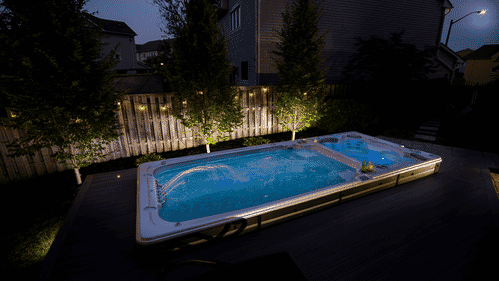
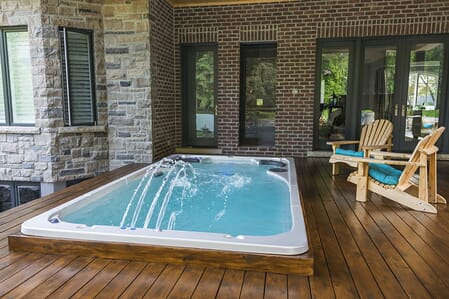
Back to the Learning Centre By Jon Filson Hydropool Hot Tubs and Swim Spas https://www.youtube.com/watch?v=vciQjxLQjjYIf you’re dreaming of a sleek, streamlined swim spa that fits seamlessly into your garden design, you might be wondering: Can swim spas be installed in-ground? The short answer is yes — but there’s a bit more to it than simply digging a hole and dropping one in. In-ground installations can look stunning and offer unique benefits, but they also require careful planning, proper drainage, and sometimes even building permissions. In this article, we’ll walk you through everything UK homeowners need to know before going in-ground with a swim spa, including pros, cons, and practical considerations. We’ll go over: What are the benefits of in-ground swim spas? What permissions are required? What are maintenance and access issues? How much does an in-ground installation cost? What options are there to in-ground? Hopefully by the end you’ll have a strong sense of whether an in-ground swim spa is right for you. Can Swim Spas Be Installed In-Ground in the UK? Yes, swim spas can be installed in-ground — and many people across the UK are choosing this option for that polished, built-in look. In-ground installation involves: Excavation to the right depth and width Foundations to support the weight of the spa A carved-out basin: to ensure access on all sides of the spa for eventual servicing Drainage systems to prevent water accumulation in the basin Access hatches for servicing pumps and components Some homeowners opt for a partially in-ground install, which reduces excavation and still delivers a stylish, semi-sunken appearance, like in the image below. What are the Benefits of an In-Ground Swim Spa? Installing a swim spa in-ground offers a number of appealing advantages: Aesthetics: It creates a clean, modern, and unobtrusive look in your garden. Accessibility: Easier to step into without needing high steps or platforms. Sheltering: Can be built into a patio, decking area, or enclosed space. Wind protection: Being lower to the ground can reduce wind exposure and heat loss. If your garden has a contemporary design or you want your swim spa to blend in, going in-ground might be the way to go. What Planning or Permissions are Needed? In many UK cases, you won’t need full planning permission for an in-ground swim spa — especially if it’s installed in a rear garden and not exceeding certain height limits. However, it’s always wise to check! You may need approval if: You live in a conservation area or listed property. You’re excavating near property boundaries or tree roots. You plan to build a permanent structure around the spa. Your Hydropool dealer will be able to guide you through the correct local processes. Is a Swim Spa Actually Worth It? What’s Involved in Preparing the Site? Site preparation is one of the most important (and costly) aspects of in-ground swim spa installation. Typical steps can include: Soil testing and ground assessment to ensure stability. Excavation using heavy machinery, with careful measurements. Laying a reinforced concrete base to support the spa (they can weigh 1,500–3,000 kg empty, and up to 9,000+ kg filled). Waterproofing and drainage systems to prevent flooding. Service access for future maintenance. You’ll also need to consider electrical supply (usually a dedicated 32 or 50-amp connection) and access for delivery, which is typically done by crane. What are the Maintenance and Access Considerations? One of the biggest challenges of in-ground swim spas is access to the equipment. Unlike an above-ground unit, you can’t simply open a side panel when maintenance is needed. To avoid problems: Ensure sufficient clearance around the spa for service technicians. Incorporate removable decking panels or hatches. Work with an installer familiar with Hydropool’s design and servicing needs. Ensuring access all around an underground swim spa is key in the event of future maintenance needs.How Much Does an In-Ground Swim Spa Installation Cost? Costs will vary depending on site conditions, access, and finish quality but here’s a general guide for UK buyers: Excavation and groundwork: £3,000–£8,000+ Concrete base and drainage: £1,500–£4,000+ Swim spa unit: £21,000–£60,000+ depending on model Installation and electrical work: £1,500–£3,500 That puts the total cost of an in-ground swim spa installation somewhere in the £30,000–£55,000+ range. The amount not included in here involves landscaping. Many people do significant landscaping around the swim spa, either with decks or shrubbery. We’re not putting an estimate here because it’s different with everyone, but we do want to flag it as a cost. We’d encourage you to talk to a local retailer here. They can help work out the budget with costs in your actual area. How Much Do Swim Spas Cost? What are the Alternatives to In-Ground Installation? If a fully in-ground spa isn’t feasible for your space or budget, don’t worry — there are other stylish options: Partially in-ground (half sunken) installations Deck surround builds that hide the spa frame Landscaped integration with planting and hardscaping Can Swim Spas Be Installed In-Ground? What You Need to Know In-ground swim spa installation is absolutely possible — and the results can be stunning. But it requires more time, planning, and investment than an above-ground install. If you want a seamless, stylish addition to your garden with easier access and a custom look, it’s certainly worth considering. Ready to explore your options? Your local Hydropool retailer can guide you through in-ground swim spa models, installation advice, and site requirements. Jon Filson is the Senior Content Manager at Hydropool Hot Tubs and Swim Spas.
-
Hot Tub Temperature Settings: Your Complete Guide
Back to the Learning Centre Your Complete Guide to Hot Tub Temperature Settings By Jon Filson Hydropool Hot Tubs and Swim Spas Published Jun 19, 2025 How hot is a hot tub sounds like it could be a philosophical question, but for most owners it rapidly becomes one that requires a real answer. `What is the ideal hot tub temperature?’ is a real question we hear about frequently. At Hydropool, we don’t want you to have to wait for an answer, so here is our best overall advice: There is no specific, set “one size all” temperature for hot tubs. It’s personal Look at it this way, you get to find your ideal hot tub temperature.Most people prefer to use their hot tub in the temperature range of 37C-40C.Our general advice is to start at 37C and adjust up or down from there.The top temperature for a hot tub is 40 degrees Celsius. That is the maximum temperature for hot tubs.That’s what we tell customers about hot tub water temperatures when asked in our stores. We wrote this because we are asked about “correct” temperatures so frequently. In this article, we will explain in more detail:What temperature should a hot tub be?What temperature should I leave my hot tub on overnight?How long do hot tubs take to heat up?How much does it cost to heat a hot tub?Hopefully, by the end, you’ll have a strong sense of temperature settings for your hot tub. What Temperature Should a Tub Be?Here’s the quick answer: We find that most people find 37C is the most comfortable for warm water, although some will go up to 40C, which is the highest setting allowable. The real answer though is this: There are no should in the world of hot tubs. Finding out what temperature you like is one of the joys of ownership: you get to find your own perfect hot tub temperature. It also may change based on your ambient temperature: If it’s cold outside, you may want a slightly warmer experience. If it’s warm, you might want to match that temperature. When I Get My Tub for the First Time, What Temperature Should I Set It At? What we recommend to any new buyer is to start with 37C and see if you prefer warmer or colder than that. This is a safe hot tub temperature to begin experimenting with. Our best advice is to try a cooler temperature and work your way up, then start too hot and work your way down. Too hot will make it difficult to actually get in and enjoy the hot tub, which defeats the purpose of owning one! What Temperature Should I Leave My Tub on Overnight? We recommend you don’t get caught up in changing temperatures. So if you generally use it at 37C, we’d suggest leaving it at that. Why do we not advise changing? What we have found is that the heating and re-heating will wind up costing you more than it would if you left it at one set temperature. Hot water tanks in houses work the same way: It’s cheaper to set it at one temperature and hold it, rather than letting the water cool and then heat it again. What Is the Most Efficient Temperature? There’s no one set temperature here. The answer is the same as above: It’s better to keep a consistent temperature than yo-yo it up and down, which will make your heater work harder adjusting, and cost you more money. Should I Lower the Temp of My Hot Tub When I Go Away? It depends how long you will be gone. If you’re going to be gone six weeks or more, you may see some savings by lowering it down to around 30C. We advise this temperature because you don’t want to drop it so low that you will use tonnes of power to bring it back up to a usable temperature again. Should I Shut My Jets off When I Go Away?Our answer here is no. The jets are important to run to keep the water circulating and moving through your filters. The cost here is not expensive as the circulation pump is not a major draw on your utility costs. And it will keep your water cleaner this way. Do Hot Tubs Increase Your Energy Bill? How Long Do Hot Tubs Take to Heat Up? If you’re starting with a newly filled tank, it can take anywhere from 18 to 24 hours to heat up your hot tub. The largest factor here is the temperature of the ambient area around you. If it’s cool out and you’re trying to get the hot tub to 40C, it will take longer than if it’s 25C outside and you’re trying to reach 37C.The temperature you’re trying to reach. It may be only a couple of degrees, but to get from 35C to 40C can take an hour, especially if it’s cold outside.The size of the hot tub. A full seven-seat hot tub will take longer than a small three-seater, but not as long as you might think, as it will have stronger heaters.How Much Does It Cost to Heat Up a Tub? We know this is a big area of interest for most people. So we have an entire article breaking down monthly costs, which includes heating here. We estimate the average heating cost is about £2.50 per day for a hot tub (this is with a tub heated to 37C and using the tub for an hour a day).Energy efficiency is key when building a hot tub. Hydropool’s hot tubs are insulated similar to a triple paned window, in that they are designed to trap heat inside. In this case, they are built to trap the residual heat from the motor inside the hot tub cabinet and use it to to help heat your water. Not every company does this. Many will choose instead to use full-foam insulation, which completely stuffs the cabinet of each hot tub full of insulation. This can work, but it’s actually less efficient than Hydropool’s system…
-
Swim Spa Sizes: How Big is a Swim Spa?
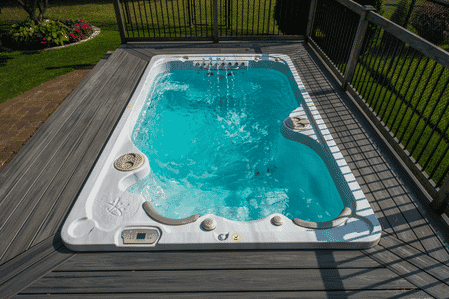
Back to the Learning Centre How Big is a Swim Spa? A Guide to Swim Spa Sizes By Jon Filson Hydropool Hot Tubs and Swim Spas Published Jun 16, 2025 You’ve learned about swim spas and you’re getting interested. But as always, logistics get in the way. Can one fit in your garden? How big is a swim spa? How deep are they? Can they go in the ground? What are swim spa sizes? These are all great questions. And we hear them often at our retail stores! Once you’ve decided that you want to be able to swim in your garden in a swim spa, the next logical step is figuring out how you can. That’s what this article is about. We want to answer the most common questions we get about swim spa sizes and installations. We know that most people are buying swim spas for the first time, and as a result, it’s only natural that they have good questions that need answering. So in this article, we will tackle the following questions:What’s the most popular size of swim spa?How big is a swim spa?What is the smallest swim spa?What is the largest swim spa?How much does a swim spa weigh?How deep is a swim spa?How much does a swim spa weigh?Can a swim spa be in ground?After reading it, we hope that you’ll have a solid sense of what sizes swim spas come in and what you may be looking for. What’s the Most Popular Size of Swim Spa? The most popular size you can find is 14 feet long x 8 feet wide (4 meters by 2.5 meters). That would be the top-selling size of swim spas around the world. Essentially every manufacturermakes this size so you will find the most options at this size.In the U.K., we find the 14-foot swim spa makes up about 30 per cent of Hydropool sales (we have two in this length, the Aquatic Trainer and the Aquatic Sport, as well as a 13-foot AquaPlay FFP). There are good reasons why this size is so popular, and why many think it’s the perfect swim spa: A 14-foot swim spa has a decent amount of space in its swim area for most people to swim in. If you’re under 6 feet, you will be able to swim in it easily.It’s small enough to feel intimate like a hot tub.It also fits in most gardens.It’s the easiest to ship. Swim spas that are longer require more space in shipping crates, and the cost of freight can creep up.A 14-foot is not the only size out there. It is just the most common! How Big is a Spa? Most swim spas range from 12 to 21 feet long and are 8 feet wide (Hydropool swim spas range from 13 feet to 19 feet long). We find 13 feet is large enough to feel like a pool and is large enough for families to use as a fun spa to play in.We find most people find the 14-foot combines the best ability to swim at the best price, while taking the least space. It’s big enough to use the swim spa for fitness, swimming and recreation.We have 16-foot swim spas and 17-foot units, which provide more space for swimming and more of a wow factor for gatherings.Our 19-foot models are long enough to hold a full swim spa and separate hot tub in one combined unit or exist as one large, open swim spa.Some manufacturers only offer 14-foot models, because of their popularity. Others have a range of sizes similar to what Hydropool offers. Still others go for the extremes. How Do I Decide Which Swim Spa Size is Best for Me?If you’re trying to decide what size is best for you and you are having trouble deciding, we’d encourage a “wet test.” Which is to say, find a dealer near you and try one or more than one out. These tests can be arranged so you’re the only one in the showroom, if you wish, and they give you a chance to see which size is best. A Guide to Swim Spa Sizes What Shapes Do Swim Spas Come In? Most swim spas are rectangles. You can find the occasional company that makes swim spas in an L-shape, with one exterior cabinet housing a separate hot tub and swim spa (Tidalfit does this, for example). If you do require an L, or a T-shaped set up, we find it can be less expensive and more effective to buy a completely separate hot tub and swim spa. That gives you more flexibility with the build and location of each as well as giving you the pick of which swim spa and which hot tub you’d like. What’s the Smallest Swim Spa? We have seen swim spas as small as 10 feet. We don’t make one that small because at that point, you’re likely going to bump into the sides of the spa when you swim, as the current will move you around. While we get that size of swim spa would be a fit for some, we don’t think the swimming experience will be worth the price you’d have to pay, and most people would either be better off in a hot tub that size or a slightly larger swim spa. What’s the Largest Swim Spa? We have seen swim spas as large as 39 feet long. That’s a pretty long swim spa, with unique applications, (since you’re only able to swim into the current at one end of it, you’ve got a loooooong stretch that really would be standing room only). Like a stretch limousine, we think it looks impressive, but it’s not something we’d want to use every day (apologies if you’re a celebrity and do use a stretch limo to go everywhere every day).How Deep is a Swim Spa?There is some variation across manufacturers:Hydropool swim spas are 53” deep.You will find some swim spas go deeper than that, up to about 5 feet or 60.”Some swim spas are more shallow, as short as 3 feet deep or 36.”We…
-
Hydropool’s Self-Cleaning Feature: How Does it Work?
Back to the Learning Centre How Does Hydropool’s Self-Cleaning Feature Work? By Jon Filson Hydropool Hot Tubs and Swim Spas Published Jun 09, 2025 Owning a hot tub in your own garden is often a dream, but there’s a good chance you’ve heard a story or two that they are difficult to maintain. That’s why we developed Hydropool’s self-cleaning system. We get asked about maintenance at our retail outlets, from people interested in having a hot tub but concerned about the amount of effort it takes to operate them on a regular basis. We completely understand: Endless cleaning and learning about chemicals is not the hot tub experience you’re looking for when you’re trying to buy something designed to help you relax.Try buying a hot tub and what you’ll find is that different hot tub makers emphasize different elements. Some may have exclusive jets for your back or feet. Some may push where or how they are made as being important. Some may hype their total number of jets and high horsepower, like you’re buying a sports car. At Hydropool, we are alone in offering self-cleaning technology. We have patented self-cleaning as a process so that we’re the only company that sells it. We are believers in it because our engineers seek to design the easiest to maintain hot tub on the market.In this article, we will explain:How Hydropool developed the self-cleaning hot tubWhat makes up a self-cleaning hot tubWhich Hydropool products have self-cleaning (and their costs)Hopefully, by the end, you’ll have a better sense of Hydropool’s self-cleaning hot tubs. How Did Hydropool Pioneer Self-Cleaning for Hot Tubs?Founded in Canada in 1980, Hydropool began as a family venture led by Dale Papke. It began as a commercial pool company, building pools for public areas such as apartments, parks and hotels. Around the world, public pools are regulated quite heavily – much more so than hot tubs ever have been. So when the company saw the hot tub market begin to develop, it assembled its first prototypes built to the same rigorous standards as public pools (Hydropool hot tubs first shipped to Europe in the early ’90s: We were one of the first companies to do so). Most companies didn’t go that far. With more lax regulations for hot tubs, they built filtration systems that worked for smaller bodies of water but that were not up to the same standard. Some were and are highly functional systems (in most cases). But they make homeowners do a little more work. They aren’t built to the same standards as public pools. They don’t clean quite as much, either. We know all this, because we make two different systems at Hydropool. Our Serenity line uses what is now industry-standard filtration.Our Signature line, which is our top-of-the-line, is our self-cleaning hot tub.What Sets Hydropool’s Self-Cleaning Hot Tubs Apart? Hydropool’s self-cleaning hot tubs feature a patented system that combines cutting-edge technology and innovative design. Here’s a breakdown of our self-cleaning process:Surface Filtration: A top filter eliminates surface debris while jets and pumps circulate the water, guiding particles towards the filter, creating the first level of water filtration. Particles either float or sink in water – they don’t stay suspended. Which is why ideall you have a top skimmer and …Bottom Vacuum Filtration: Hot tubs require surface and bottom cleaning as part of water care. A vacuum constantly sucks up any debris that settles at the bottom of a Signature hot tub, a feature unique to Hydropool. Others may have floor drains, but nothing with actual suction. That is a patented Hydropool element. Pressurized Filtration: Positioned after the pump, our hot tub cleaning filter ensures that every drop of water passes through. In our tests, 100 per cent of the water is filtered in about 10-15 minutes with a self-cleaning system. Want to see it in action? Here’s how Hydropool self-cleaning hot tubs work. Hydropool’s Self-Cleaning Technology How is Self-Cleaning Different Than a Regular Hot Tub? The two key differences are that most hot tubs do not come with a bottom vacuum. The odd one may put a filter on the bottom, but unless it has suction on it, that filter won’t do much.The floor vacuum is key because particles either float on top of the hot tub’s water, or they sink to the bottom (that’s due to the inherent properties of water, nothing we did).Most hot tub companies also put the pump behind the hot tub’s filter. That simple change means that you don’t know if all of your water is being filtered. It certainly doesn’t guarantee it will all be filtered. Again, you can have a hot tub work without self-cleaning technology. We estimate it takes 20 minutes a week of maintenance or less for a self-cleaning hot tub and about 40 minutes with a standard hot tub. Why Choose Hydropool’s Self-Cleaning Hot Tubs?Combined with Hydropool’s AOP system, with self-cleaning you have the biggest engineering effort available behind keeping your hot tub sanitized. An AOP system stands for Advanced Oxidization Process. It uses combined UV light and oxidization to reduce particulate matter in your hot tub before it becomes an actual problem, like turning into mold. This in turn reduces how much you have to spend on chemicals each month by about 50 per cent. At Hydropool, we call this our PureWater system. Just like our self-clean system is based on how public pools work, our PureWater system is based on how your drinking water is cleaned (which again, is far more regulated than how are hot tubs are). Here’s a video that spells out how it works. Which Hydropool Product Lines Feature Self-Cleaning Technology?Our Signature line of hot tubs and Aquatic and Executive line of swim spas feature self-cleaning. Prices start at £9,995 for the four-person 395G hot tub and £32,995 for the Executive Sport 16EX swim spa. Hydropool’s Signature Hot Tub Collection Is a Self-Cleaning Hot Tub Right for You?Forty years ago, we originally built a self-cleaning hot tub because it was the only way we knew how to make one. We have refined and continued to develop it over…
-
What is a Swim Spa? A Comprehensive Guide
Back to the Learning Centre What is a Swim Spa? A Comprehensive Guide By Jon Filson Hydropool Hot Tubs and Swim Spas Published Jun 05, 2025 At Hydropool, we often get asked, “What is a swim spa?” by people who have come in to look at hot tub or who have heard of them and are just curious. It’s time to demystify this remarkable potential addition to your garden. The swim spa combines the best features of a swimming pool and a hot tub. Imagine a long and wide hot tub capable of year-round swimming, complete with comfortable seats and heating capabilities to transform it into a luxurious hot tub. It’s a fusion of a hot tub and a pool, offering you the best of both worlds at a fraction of the cost of a traditional pool. A swim spa is: A year-round aquatic playground that seamlessly integrates the benefits of a pool and a hot tub. A versatile unit that caters to everyone, from kids splashing around to elite-level triathletes seeking a training environment. With its seating and heating features, you can enjoy it as a hot tub throughout the year. Since we are asked about them so often, we wanted to explain what they are in detail. In this article, we will provide answers to the following questions: What is a Swim Spa? What is the Cost of a Swim Spa in the UK? Pros and Cons of Swim Spas How Does a Swim Spa Work? What to Look for in a High-Quality Swim Spa? Let’s get started! How Much Does a Swim Spa Cost? At Hydropool, most customers invest between £25,000 and £50,000 in a swim spa. This comprehensive price covers everything you need, from the swim spa unit itself to the concrete pad, electrical work, and delivery (which may vary depending on your location). In comparison, the starting cost for an in-ground pool is approximately £60,000, and the expenses can rise significantly from there. For more details on swim spa costs, feel free to explore our dedicated article here. How Much Does a Swim Spa Cost? How Big are Swim Spas? Swim spas typically range from 4 to 6 meters in length and are around 2.5 meters wide and 1-1.2 meters deep. The installation process involves placing the swim spa on a pre-made concrete base, and in most cases, a crane can be used for the setup. How to Choose Swim Spa Size? What are the Pros and Cons of Swim Spas in the UK? Swim spas offer a multitude of benefits to enhance your fitness, relaxation, and overall well-being. Whether it’s a chilly winter day or a scorching summer afternoon, you’ll always have access to warm water. They provide a space for aquatic workouts, swimming, and soothing sore muscles. Moreover, swim spas serve as ideal pools for family fun and teaching kids to swim. Here’s a quick rundown of the pros and cons: Pros Offers the benefits of a hot tub and a swimming pool More cost-effective than an in-ground pool Year-round usability without breaking the bank Simplified installation with fewer permits required Cons Initial costs are higher than a standard hot tub Requires a concrete base and hardwired electrical setup Regular maintenance is necessary, like any pool or hot tub May attract friends and neighbors, which can be good or bad, depending on your preference. How Does a Swim Spa Work? A swim spa operates on a concept similar to a treadmill, but with water in place of a conveyor belt. It employs jets or propellers to generate a current, allowing you to swim in place without reaching the end. Swim spas come with adjustable settings, enabling you to customize the swim intensity. Some models even include jets or tethers to help you stay in place as you swim. Of course, you don’t have to swim in it. A swim spa can be used as a swim spa pool. You can lounge in it, play with the kids or use it like a large hot tub. It combines the best of several worlds. Hot Tub or Swim Spa: Which is Best? Your choice between a hot tub and a swim spa should align with your primary needs and preferences. If relaxation and massage therapy are your top priorities, a hot tub is the ideal choice. However, if you seek a versatile solution that combines exercise with relaxation, a swim spa can be a much better choice. Hot tubs offer intimate wellness experiences, while swim spas provide ample opportunities for fitness. Hot Tubs or Swim Spas? What Should I Look for in a Quality Swim Spa? Choosing the right swim spa depends on your specific requirements and usage intentions. Whether it’s for aquatic fitness, family fun, or both, it’s crucial to determine your priorities in advance. Consider these four key factors: The Swim System: Look for a swim spa that delivers an above-average and versatile swim current, catering to users of all skill levels. In-Water Fitness Features: High-quality swim spas often include additional tools, such as fitness kits, for in-pool exercises. Size Matters: Your swim spa should function as both a small pool and a swim area. Ensure there’s enough space for various activities. A Functionable Hot Tub: Opt for a swim spa with at least two to four seats and ample jets for a relaxing soak. Why a Swim Spa Might Be Perfect for You? Swim spas may be relatively new to the market, going back to about the 1980s, but they offer countless reasons to consider them: If you’ve always dreamed of having a pool but prefer a more compact solution. If you love the idea of a hot tub but crave additional functionality. If you seek an aquatic fitness facility for your garden. If you want to swim year-round. If you want a place where your children or grandchildren can have fun. For more information on a Hydropool swim spa or to find a Hydropool retailer near you, click here. Jon Filson…
-
Can Swim Spas Be Used as Hot Tubs? Understanding the Differences
Back to the Learning Centre By Jon Filson Hydropool Hot Tubs and Swim Spas If you’re torn between a hot tub and a swim spa, you’re not the only one. Many shoppers ask us at Hydropool: Can a swim spa be used as a hot tub too? The short answer is yes, it can. In short, a swim spa can do anything a hot tub can, plus you can work out in it, swim in it and use it as a small pool. A swim spa is heated year-round and you can sit in it and get a massage, just like you can with a hot tub. There are differences with each product and in this article, we’ll go over what they are. We’ve been building hot tubs at Hydropool for 45 years and swim spas for more than 30, so we know a little bit about each! In this article, we’ll help you decide what’s right for your garden by answering the following questions: Can you sit and soak in a swim spa like a hot tub? Do swim spas have massage jets like hot tubs? What’s the difference in water temperature between a swim spa and a hot tub? Are there dual-zone swim spas with hot tub sections? Is it better to buy a hot tub, a swim spa, or both? Can a swim spa truly replace a hot tub? Hopefully by the end you’ll have a strong sense of which is right for you. Can You Sit and Soak in a Swim Spa Like a Hot Tub? Yes. Most swim spas have built-in seating areas at one or both ends, allowing you to relax just as you would in a hot tub. These seats are typically moulded for comfort, and the spa water can be heated to the same temperature as a hot tub (up to around 40°C or 104°F). Does it feel the same? Not quite. A swim spa has more space than a hot tub, so you’re sitting further apart in many cases, although this depends on the style of the swim spa. So a hot tub offers a more intimate experience, while a swim spa offers a more spacious one. But both provide a chance to soak and get a hydrotherapy massage. Do Swim Spas Have Massage Jets Like Hot Tubs? They do. Swim spas often include hydrotherapy jets in the seated areas, which can target the back, shoulders, and legs. High-end models offer very similar jet power and variety to premium hot tubs. No company selling you a swim spa wants you to feel like skimped or are missing out. Can You Actually Swim in a Swim Spa? What’s the Difference in Water Temperature Between a Swim Spa and a Hot Tub? Both can be heated to hot tub temperatures, but they’re often used at different settings: Hot tubs are commonly kept around 37°C to 40°C (98°F to 104°F) year-round. We encourage people to start at 100F, and move up or down from there. Swim spas are often set lower, around 26°C to 30°C (78°F to 86°F), especially when used for swimming or working out or playing. Otherwise, the workouts become too warm. Of course, you can set the temperature to whatever you wish. Many UK owners adjust the temperature seasonally, warming it up for winter soaking or lowering it for summertime, when it comes to both hot tubs and swim spas. Are There Dual-Zone Swim Spas With Hot Tub Sections? Dual temperature models such as this Hydropool Aquatic Sport 19DTAX are elegant options with great flexibility. Yes. Dual-zone swim spas feature two separate compartments: One side features a large tank for swimming, workouts or simply hanging out, as you might in a pool. This is often with a lower temperature. One side that functions just like a traditional hot tub. This one has a higher temperature and more jets for relaxing. Each section can be heated and controlled independently. For UK buyers who want the best of both worlds, this can be a brilliant compromise though it typically comes at a higher price point and takes up more space. To some buyers, it’s still not enough! For those we suggest you buy a large swim spa and a large hot tub separately. How Big Is a Swim Spa? Is It Better to Buy a Hot Tub, a Swim Spa or Both? That depends entirely on how you plan to use your spa: Go for a hot tub if your main goal is relaxation, hydrotherapy, and year-round warmth in a compact space. Choose a swim spa if you want exercise, family fun and flexibility with seating and temperature. Consider both (or a dual-zone model) if you’ve got the garden space and budget, and want to cover all bases. Many UK homes don’t have room for two separate units, which is why swim spas are becoming such a popular all-rounder. Can Swim Spas Be Used as Hot Tubs? Understanding the Differences Yes, swim spas can function a lot like hot tubs, offering heated water, massage jets, and a place to relax. But they’re not identical. Hot tubs focus entirely on comfort and hydrotherapy, while swim spas also prioritise versatility and space for movement. You can do more in a swim spa than you can in a hot tub, but a swim spa can still do everything a hot tub can do. Here’s a quick summary: Swim spas do include seating and jets, but fewer than a dedicated hot tub. You can heat a swim spa to hot tub temperatures — or keep it cooler for exercise. Dual-zone swim spas give you the best of both worlds. Whether one can replace the other depends on your space, budget, and goals. Still weighing up your options? Chat to your local Hydropool retailer about which spa suits your lifestyle and space. Jon Filson is the Senior Content Manager at Hydropool Hot Tubs and Swim Spas.
-
How to Adjust Alkalinity in Your Hot Tub
Back to the Learning Centre By Jon Filson Hydropool Hot Tubs and Swim Spas https://www.youtube.com/watch?v=FGUJIppfFyMProper water balance is essential for maintaining a safe, comfortable, and enjoyable hot tub experience. One of the most crucial aspects of water chemistry is alkalinity, which plays a significant role in stabilizing pH levels and protecting both your equipment and skin. If your hot tub’s alkalinity is too high or too low, it can lead to issues such as skin irritation, cloudy water and over time, potentially damage the tub’s components. In this article, we’ll guide you through everything you need to know about adjusting alkalinity in your hot tub, including: What alkalinity is and why it’s important How to test alkalinity levels How to raise or lower alkalinity levels Common mistakes to avoid At Hydropool, we want to ensure your hot tub is always ready for a relaxing soak. Let’s dive in and learn how to maintain proper alkalinity levels in your hot tub. What is Alkalinity and Why is it Important? Alkalinity refers to the water’s ability to neutralize acids, which helps keep the pH level stable. In simple terms, it acts as a buffer to prevent rapid shifts in pH levels, keeping your water balanced and safe. It’s actually often called “buffer” in the industry as a result. Alkalinity is measured in parts per million (ppm), and for hot tubs, the ideal range is typically between 80–120 ppm. If alkalinity levels are too low, the pH can fluctuate, leading to corrosion of your hot tub’s metal components, such as heaters and jets. If it’s too high, it can cause the water to become cloudy and prevent pH adjustments, making it difficult to maintain proper water chemistry. How Does a Hot Tub Work? How to Test Alkalinity Levels Before you can adjust your hot tub’s alkalinity, you need to test the water to determine the current levels. You can use a few different methods for testing: Test Strips: These are the quickest and easiest method. Simply dip the strip into the water, wait for a few seconds, and compare the colour change to the chart provided with the strips. Most test strips will provide readings for both alkalinity and pH. For a hot tub, water test strips are the least expensive and all you should ever need for water testing. Digital Testers: These handheld devices offer a more precise reading and are often a bit more expensive than test strips. They can give you an accurate measurement of alkalinity and pH with just a small sample of water. Liquid Test Kits: A more traditional method, liquid test kits usually involve adding drops to a water sample to create a colour change. The results are then compared to a colour chart to determine the alkalinity. Regardless of the method, it’s important to test the water regularly (ideally every few days) to ensure the water chemistry remains balanced. How to Raise or Lower Alkalinity Once you know your alkalinity levels, you can adjust them by adding specific chemicals to the water. Here’s how to do it: How to Raise Alkalinity If your alkalinity is too low (below 80 ppm), you’ll need to raise it to prevent pH swings and protect your hot tub equipment. The best chemical to use for this is alkalinity increaser, which typically contains sodium bicarbonate (baking soda). Here’s how to raise the alkalinity: Calculate the Amount Needed: Follow the instructions on the product packaging, as the amount of alkalinity increaser needed depends on your hot tub’s size. Most containers will come with a set sized scoop that helps with this process. Typically, adding around 1.5 oz (42g) of sodium bicarbonate per 1,000 litres of water will increase alkalinity by about 10 ppm. Add the Chemical: Add the recommended amount of alkalinity increaser to your hot tub water. It’s best to add the chemical gradually and evenly around the perimeter of the tub. Run the Jets: Turn on the jets to circulate the water and allow the alkalinity increaser to dissolve completely. This will take between 15 minutes and half an hour. Don’t use the hot tub during this time. Retest the Water: After a few hours, retest the water to ensure the alkalinity is within the ideal range (80–120 ppm). If necessary, repeat the process until you reach the desired level. Adding chemicals is best done slowly and carefully in order to prevent chemical swings in your water.How to Lower Alkalinity If your alkalinity is too high (above 120 ppm), you’ll need to lower it to bring your water chemistry back into balance. To lower alkalinity, you’ll need pH decreaser (also known as pH-minus or muriatic acid) or an alkalinity decreaser. But just to confuse people, it’s usually called pH decreaser. Here’s how to lower the alkalinity: Calculate the Amount Needed: Refer to the product’s instructions for the exact amount of pH decreaser needed. Generally, you’ll need around 1.5 oz (42g) of pH decreaser for every 1,000 litres of water to lower alkalinity by 10 ppm. Add the Chemical: Slowly add the recommended amount of alkalinity decreaser to the water while the jets are running to ensure the chemical is evenly distributed. Wait 15 minutes to half an hour. Retest the Water: After several hours, retest the water to check the alkalinity level. If necessary, add more alkalinity decreaser, but always do so gradually to avoid overshooting your target level. Otherwise you’re caught in a trap of adding then subtracting, adding and subtracting. Hydropool’s Self-Cleaning Hot Tubs Common Mistakes to Avoid When Adjusting Alkalinity Adjusting alkalinity is a simple process, but there are a few common mistakes you’ll want to avoid: Adding Too Much Chemical: Always follow the manufacturer’s instructions and start with small amounts when adjusting alkalinity. Adding too much chemical quickly can cause the levels to swing too far in the opposite direction. Take your time and get it right. Alkalinity is usually one of the most stable compounds. Not Testing the Water Regularly: Water chemistry can change over time due to factors like bather load, weather conditions, and the type of chemicals used. Be sure to test your hot tub’s alkalinity and pH each week to keep…
-
How to Choose the Right Size Swim Spa for Your Garden
Back to the Learning Centre By Jon Filson Hydropool Hot Tubs and Swim Spas Choosing the right size swim spa isn’t just about what looks good. It’s about how it fits your garden, your lifestyle and your long-term goals. Whether you’re after a place to relax, exercise, or entertain, size matters. Space is tight in gardens across the United Kingdom and you want to make sure that you’re not buying too much or depriving yourself of space you could really use. We get asked about size and space frequently at our Hydropool stores, so we wanted to give you an answer here. In this guide from Hydropool, we’ll cover: Common swim spa sizes available in the UK How to measure your space properly What to consider before buying Tips for selecting the best fit for your needs Let’s figure out what size of swim spa makes the most sense for you. What Sizes Do Swim Spas Come In? Most swim spas are about 2.2 metres wide and about a metre deep to about 1.4 metres deep. These measurements are roughly consistent. Some manufacturers may have a “deep” swim spa, for additional space in the tank if you want it. Length is where most of the options are. Swim spas in the UK typically range from about 3.7 to 6.7 meters long (12 to 22 feet), with most falling into one of three categories: Compact (12–14 ft / 3.7–4.3 m): Great for small gardens or for people who primarily want hydrotherapy or light exercise. Hydropool’s version of this is the 13-foot FFP, which is known as our Family Fun Pool. Standard (14–17 ft / 4.3–5.2 m): A popular all-rounder size that supports both swimming and relaxation. Ideal for families. The Hydropool Aquatic Sport is a good example here. Large (17–22 ft / 5.2–6.7 m): Best for tall people who would kick their feet on the sides of a shorter swim spa, those who just want the luxury of a larger build or those who want a dual-zone spa with separate swim and hot tub areas. Hydropool’s largest is the 19-foot DTAX model, which features both a swim spa and a hot tub. Here’s a tip: If you’re trying to decide what swim spa would be best for you – and you’ve done the measurements so you know roughly what will fit – then your next step is to see a swim spa in person and potentially get in it. A good retailer will let you get in the swim spa and even swim in it on site if you want, so you know if it feels large enough for what you have in mind. With the money a swim spa costs, “try before you buy” isn’t a bad idea. If you haven’t done the measurements, keep reading! We’ll tell you how. How to Measure Your Garden for a Swim Spa Before you fall in love with a specific model, it’s essential to measure your available space carefully so you’ll know it will fit. Here’s how: Clear the area: Remove any temporary garden furniture, tools or pots that might obscure your view of the space. Mark the footprint: Use chalk, stakes or a garden hose to outline potential swim spa sizes on your patio, decking or lawn. Allow extra space: You’ll need at least 0.5–1 metre (20–40 inches) of clearance around the spa for long-term servicing, cover removal and steps. This applies whether your swim spa is above ground or below. This is a crucial element often overlooked! Check access: Make sure there’s nothing blocking a crane from lowering the swim spa in place. Your local retailer will be happy to come to your home and do a free site inspection if you have any concerns. What Else Should You Consider When Choosing Size? It’s not just about the physical space. Choosing the right swim spa size is also about how you plan to use it. Ask yourself: What’s your primary goal? If you’re after resistance swimming or daily fitness, you’ll need enough length to swim without interruption. Hydropool’s Aquatic Trainer series is designed specifically for this purpose. How many people will use it? A compact swim spa may be perfect for couples, but larger families or social users will benefit from extra seating and space. The Aquatic series has 14 foot and 17-foot editions. Do you want separate zones? Dual-zone swim spas let you enjoy a hot tub and swim spa in one unit. These tend to be on the larger side (typically 5.8 m / 19 ft or more). An example is here. What’s your energy budget? Bigger swim spas hold more water and take more energy to heat. A quality swim spa will help reduce running costs across all sizes. Will it fit your garden layout? Think about sun exposure, privacy, and how your swim spa will integrate into your garden design. Corner placement, decking options or gazebos may influence your choice. Popular Hydropool Swim Spa Sizes To give you a head start, here are some examples of Hydropool models and their sizes: Hydropool AquaPlay 13FFP – 381 cm (12.5 ft): A compact option perfect for active families or those with limited space. Hydropool AquaSport 14AX – 442 cm (14.5 ft): A mid-sized, all-rounder spa for both exercise and relaxation. Hydropool AquaTrainer 17AX – 533 cm (17.5 ft): A larger unit for serious swimmers with advanced jet systems. Hydropool Executive Trainer 19EX – 574 cm (19 ft): Dual-zone luxury with powerful swim current and a full-size hot tub. All models are designed with smaller gardens in mind and come with advanced insulation and energy-saving features. Final Tips Before You Decide Visualise the size using garden furniture or cardboard to mock up the footprint. Speak with your installer to confirm delivery access, clearance needs and electrical requirements. Think long-term: Choose a size that meets not only your current lifestyle but also future plans (kids growing up, entertaining more often, etc.). How to Choose the Right Size Swim Spa for Your Garden So, how do you choose the right size swim spa? Start by measuring your space, understanding how you’ll use it, and thinking ahead. Make sure you add a couple of feet to the area. Whether you opt for a compact or dual-zone model, choosing…
-
Can You Actually Swim In a Swim Spa? The COMPLETE Answer
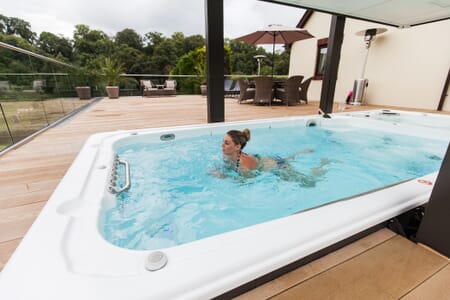
Back to the Learning Centre Swim Spa Swimming: Your Guide to Everything You Can Do In a Swim Spa By Jon Filson Hydropool Hot Tubs and Swim Spas Published May 05, 2025 Are you wondering, “Can I swim in a swim spa?” or contemplating how to make the most of your swim spa for fitness? At Hydropool, we understand your curiosity, and we’re here to provide answers and insights into swim spa workouts and aquatic fitness. People invest in swim spas for various reasons. Some seek a cost-effective alternative to traditional pools, while others desire year-round fitness training without leaving their homes. Many simply want a safe aquatic playground for their children. We recognize that discussing swim spa fitness plans with strangers in-store can be uncomfortable. That’s why we elected to write this article. It aims to reveal the potential of swim spa models and how they can enhance your lifestyle, especially since they are still relatively new to many people in the UK. In this article, we’ve enlisted the expertise of Jodie Becker, a Canadian triathlete, mom, and mental health advocate. Together with Jodie, we’ll answer essential questions, such as: Can you really swim in a swim spa? What are the advantage of swim spa training? Who can work out in a swim spa? What’s the best swim spa exercise? Can you build muscle in a swim spa? Let’s take a look at what you can do. Can You Really Swim in a Swim Spa? The answer is a resounding yes! Swim spas originated from dropping a propeller into a pool, creating a current to swim against. Over the years, they have evolved significantly, with Hydropool playing a leading role in their development since the 1980s. Today, most swim spas have replaced propellers with jets, which, when well-designed, create a smooth, consistent flow of water. Hydropool’s swim spas all work this way (propellers are great, but they take up a lot of room in the spa that isn’t required with a jet system). While each manufacturer may offer a unique swim experience, the fundamental concept remains the same: water flows from one end creating a current swimmers face this end and swim in place, often aided by buoyancy jets to help hold them in place suction picks up the water at the other end of the swim spa, recycling it back to the jets to create a continuous flow of current to swim into. Some swim spas may require tethers (a rope which holds you in place as you swim), but they are generally unnecessary in a quality swim spa. Some also create a turbulent swim with a lot of air in the water and a great deal of splashing, replicating open water swimming. Others aim to create a more wide, consistent channel of water (Hydropool is in this camp). Whether you prefer a more dramatic wave-like experience or a calm, strong, ripple-free swim when buying a swim spa, there’s one to suit your needs. What Are the Key Advantages of Swim Spa Training? Strength and Aerobic Capacity Aquatic fitness offers a unique advantage—it allows you to build strength and aerobic capacity without subjecting your muscles and joints to excessive strain. This low-impact workout minimizes discomfort and pain, making it accessible to individuals of all fitness levels. While swim spa workouts can be part of a weight loss-focused fitness routine, triathlete Jodie Becker emphasizes a broader perspective. For her, it’s about promoting movement, well-being, and the joy of exercise. A toned body often follows a lifestyle centered on movement and wellness. As Jodie says of her clients: “I want them to enjoy exercise.” Canadian triathlete Jodie Becker uses her swim spa to train year-round, even in the middle of winter. That way she can compete in any race around the world, no matter what time of year. Is Aquatic Fitness Exclusively for the Elderly? Exercise and enjoyment don’t always go hand in hand, but swim spas offer a delightful exception. Aquatic fitness is often associated with older adults due to its joint-friendly nature. But swim spas provide a fitness environment suitable for athletes of all ages and skill levels. Regardless of your age or fitness stage, regular swim spa use can significantly contribute to a healthy lifestyle. As Jodie asserts, “We have proven, over and over, that aquatic fitness is for athletes at all levels.” While it has historically been embraced by those with reduced mobility or recovering from injuries due to its low-impact nature, it’s by no means limited to low-intensity workouts. What’s the Ultimate Swim Spa Exercise? If you had to choose just one fitness exercise in a swim spa, it would undoubtedly be swimming. Swimming offers a comprehensive cardiovascular workout that engages all the muscles in your body. To keep the experience exciting and prevent monotony, we continually introduce new and unique workouts designed to keep you motivated and in excellent shape. Harvard Health agrees, stating that swimming: Engages all major muscle groups Enhances heart health Boosts cognitive function Places minimal stress on joints and the body The natural buoyancy of water reduces joint stress while providing consistent resistance to strengthen muscles, making swimming a full-body workout. Can You Build Muscle Using a Swim Spa? Absolutely, you can build muscle through swim spa workouts. Hydropool offers a fitness kit tailored for swim spa use, featuring elements designed to facilitate muscle development. As Jodie points out, “Water provides challenging resistance.” When combined with specialized equipment, it is effective in strength building. Are There Exercises to Avoid in Swim Spas? While there are a range of swim spas that offer an excellent fitness environment, exercising caution is essential. One fundamental guideline is to avoid using equipment designed for dry land in the pool. Available water fitness kits and specific aquatic gear are designed to harness water’s properties for strength building, improved flexibility, and enhanced mobility. Using inappropriate equipment in the swim spa could lead to damage or safety concerns. Is Aquatic Fitness Right for Me? You can swim in a swim spa or work out in one dozens of ways. Aquatic fitness is an excellent choice for almost anyone. However, it shouldn’t be limited to specific groups. Aquatic fitness, especially swimming, offers lifelong advantages…
-
How Do You Install a Swim Spa? Your Comprehensive Guide to the UK from Hydropool
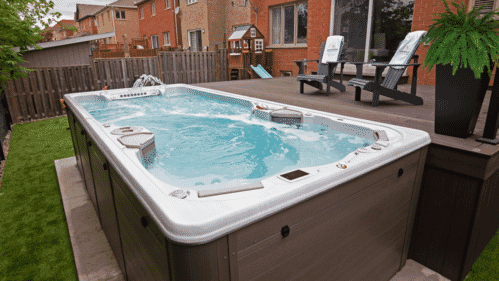
Back to the Learning Centre Like someone who has found an indie band of their very own, you have discovered the swim spa. It’s like a hot tub, but you can swim in it, but less expensive than a pool. The only question left is where it goes in your garden. By Jon Filson Hydropool Hot Tubs and Swim Spas Like someone who has found an indie band of their very own, you have discovered the swim spa. It’s like a hot tub, but you can swim in it, but less expensive than a pool. The only question left is where it goes in your garden.And then it hits you:Where can it go in your garden?Or should it go in your garage?Maybe it should go indoors?Or maybe it should partially above ground, for a lifted effect.Maybe it should go entirely below? Or perhaps just sit there on top, with decking built around?Or can it go on a deck itself?So many questions. We are asked all of these and more from swim spa buyers and would-be buyers at our retail stores. So we wrote this article with the answers, so you could know what option fits you best. Have a read and hopefully by the end it will be more clear on what works best for you.Can you put a swim spa in the ground?Yes. Swim spas can be placed in-ground all the way or part of the way. The most popular option locally is to semi-submerge the hot tub into the ground, with more than three-quarters of swim spas being installed this way in the UK. This look is quite refined and requires additional landscaping, but done well, the swim spa will look like an integrated and expensive addition to your home and garden.You will need to create a wide area surrounding the swim spa, so that it can be accessed for service, and a pump will need to be installed to keep that area from becoming filled with water due to rain or overflow from swimming, should you be especially energetic.Can you bury a swim spa?As in put it entirely below ground? Yes you can. This is another quite popular approach with all of the caveats of putting a swim spa in the ground part of the way. You will need to build a basin to hold the swim spa so that it can be accessed for service and you will need to ensure that the basin is kept dry with a pump.Can you put a swim spa in a garage?Yes. There are a few thing you’re going to want to be sure of though.To install a swim spa in a garage:You will want to be sure the foundation is solid, as swim spas must live on a flat, stable, strong surface, such as concrete pad.You will want to make sure there is adequate electrical capabilities, as swim spas require 240V of power.You will want to have sufficient ventilation. Exhaust ventilation is expected, to forcibly expel the moisture that invariably will build up.You will want to be satisfied you have access. How are you getting the swim spa inside the space you’re considering? If it’s not built, this is relatively easy. But if it is built already, you will need to ensure you have a large enough doorway to slide the swim spa through.If putting your swim spa in the ground indoors, the same caveats apply as outdoors. You will need a concrete basin surrounding your swim spa to guarantee access, and you will want a system to ensure that basin is free of water.Can you put a swim spa indoors?Yes. It doesn’t have to be just a garage! A swim spa can be installed indoors. Our showrooms regularly feature swim spas that you can test before you buy, for example, so we are quite used to indoor installations.Keep in mind the floor/foundation, adequate ventilation and electrical will all be required as well as access to the space in the first place: The swim spa will need to get in the door somehow. With indoor installations, we highly recommend you speak to a local retailer who can work with you to advise you of the particulars to your location. We find even in gardens, every delivery is unique.Do you need planning permissions for swim spas?Here’s the good news: In 99.9% of situations you do not need any permissions. You should always discuss this with your local retailer, however, before you buy. But it is a very rare situation where anything document is required as a swim spa is a portable unit, not a permanent one like an in-ground pool.Can you put a swim spa on a deck?In short, no. We do not advise this. A swim spa is extremely heavy and a deck isn’t build to take the weight. Swim spas must be placed on a secure concrete pad.Swim spas are great contributors to gardens. While it is common to put them in the ground, it isn’t mandatory. Decking can be built around a swim spa so that you’re able to step right in and so that your swim spa doesn’t stick right out but is instead incorporated into the surroundings.Where can I install a swim spa?Swim spas can be more easily located in your garden or indoors than pools. There is additional work for different applications, but swim spas remain versatile units.Most people in the UK semi-submerge swim spas, with more than 3/4s of the buying public opting for that particular approach. It requires a bit of extra effort, but the overall effect is often stunning, with access made easy through steps and decking.Whichever way you decide is right for you, we hope we have answered many of your questions here on how swim spas can be installed. If we have missed any questions, please let us know, by contacting your local retailer here. Jon Filson is the Senior Content Manager at Hydropool Hot Tubs and Swim Spas.
